Digital transformation for small and medium-sized enterprises
Acceleration of workflows and reduction of manual work by eliminating process and media breaks.
HighPots offers already networked systems
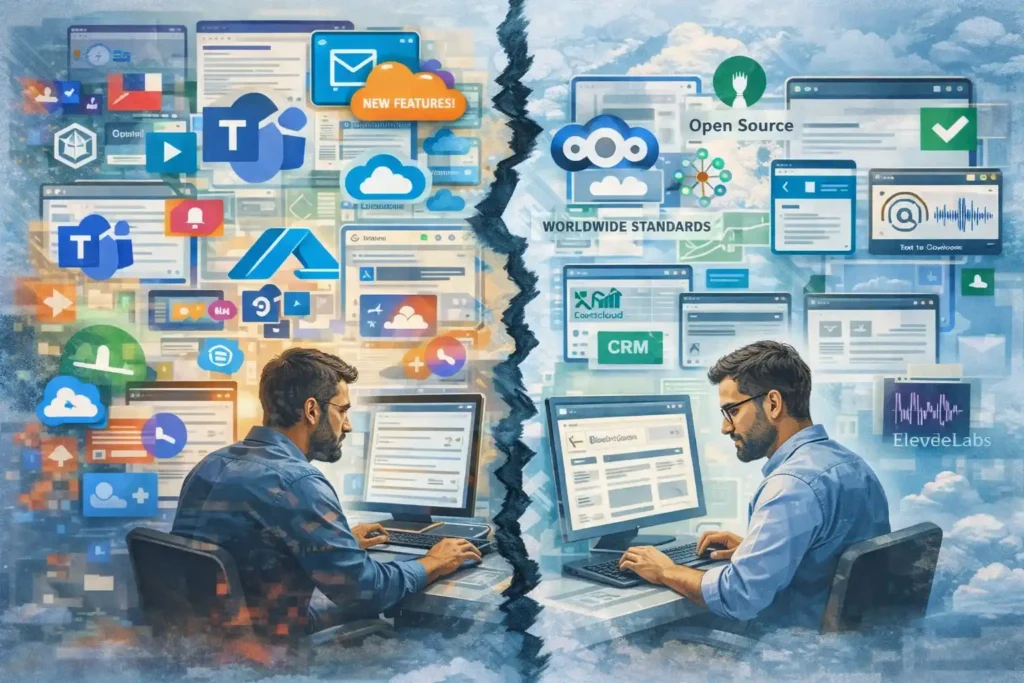
We offer some ready-made technical sub-solutions. For example, already digitally transformed systems. You can already receive networked CRM, e-mail, chat/video conferencing, web tracking and content management systems, as well as telephone systems from HighPots. You can rent these systems in our cloud or operate them on your own servers. The majority of the systems are open source. Those that are not are developed and supported in Europe. See also HighPots Open Source Cloud
Interface Development
HighPots as a service provider for digital transformation developed more than 1000 interfaces last year. The development of technical interfaces plays a crucial role in digital transformation. Interface development makes the integration of different systems, platforms, and data sources possible. Interface development for digitalization/transformation enable. We operate and develop software for more than 30 years
System Integration
Various IT systems and applications are operated in isolation from one another. Through interface development, these systems are connected to one another and exchange data and information.
Data Consolidation
Data stored in various systems, files, and databases are consolidated and merged into a central data room. This enables a holistic view of the data. HighPots Data Analysts extract valuable information for your company from this. Decision-making is significantly accelerated.
Process automation
Interface development contributes to process automation. Technical interfaces enable and facilitate communication and interaction between different systems. And thus also between different departments and branches. This results in a reduction in manual processes and errors. It also speeds up process flows.
Connection to external partners, suppliers, and platforms
Durch die Schnittstellenentwicklung wird der Informationsaustausch mit externen Partnern, Lieferanten und (deren) Plattformen etabliert. Diese externen Akteure werden nahtlos in Ihre eigenen Systeme und Prozesse zu integrieren. Effizienzsteigerungen, erleichterte und reduzierte Zusammenarbeit sowie die Informationsmenge werden maßgeblich verbessert.
Scalability and flexibility
Durch die Schnittstellenentwicklung wird der Informationsaustausch mit externen Partnern, Lieferanten und (deren) Plattformen etabliert. Diese externen Akteure werden nahtlos in Ihre eigenen Systeme und Prozesse zu integrieren. Effizienzsteigerungen, erleichterte und reduzierte Zusammenarbeit sowie die Informationsmenge werden maßgeblich verbessert.
Implementation and consulting for digitalization in small and medium-sized enterprises
HighPots is a service provider for digital transformation in the mid-market. As a software technology company, we don’t just look closely at your company culture and processes. We also implement digitization technically. We develop custom software and interfaces and connect your systems. We calculate your financial savings potential in advance and show you where digitization is worthwhile for you. To do this, we use a pragmatic maturity model that we have successively adapted to digital transformation in the mid-market in recent years.
Transformation of small and medium-sized enterprises
Digital transformation in small and medium-sized enterprises is often more complex than in large corporations. This is due to the numerous applications and data distributed across small and medium-sized enterprises. While large corporations make adjustments to a few systems, e.g., within a company-wide ERP system such as SAP, there is a wide variety of applications in small and medium-sized enterprises.
Digital transformation challenges
The large technology corporations like Microsoft, Oracle, Salesforce or SAP offer ERP systems that can electronically map large parts of a company’s process spectrum. CRM, sales, marketing, and finance as well as accounting processes are already mapped there and interlinked. However, the one-time costs for implementing these systems and the annual license costs are substantial. Consultants for these systems have high hourly rates. All tech corporations also offer solutions for SMEs at lower costs. However, these solutions are too limited and inflexible regarding customization and the connection of further systems.
The large technology corporations like Microsoft, Oracle, Salesforce or SAP offer ERP systems that can electronically map large parts of a company’s process spectrum. CRM, sales, marketing, and finance as well as accounting processes are already mapped there and interlinked. However, the one-time costs for implementing these systems and the annual license costs are substantial. Consultants for these systems have high hourly rates. All tech corporations also offer solutions for SMEs at lower costs. However, these solutions are too limited and inflexible regarding customization and the connection of further systems.
In digital transformation for SMEs, it is not uncommon for data to exist in the form of Microsoft/Open-Office applications, the CRM system is not integrated with the Content Management System, or the accounting application. Offline point-of-sale systems run separately from the online shop, or production facilities are not connected to the business applications.
In addition, digitalization projects have often failed. Established consulting firms were frequently involved. Thus, the budget for change management within the scope of digital transformation is exhausted.
Overview of challenges in digital transformation
After numerous digitalization projects, regardless of whether they were technical implementations or digital transformation consulting, we have a lot of experience. Therefore, we know that digital transformation strategies must face the following challenges:

Cultural change
One of the biggest challenges is often cultural change within the company. The introduction of new technologies and working methods often requires a change in thinking and can meet with resistance.
Complexity
Digital transformation projects can be very complex, especially in large organizations with many departments, processes, and legacy systems. Integrating new technologies and redesigning business processes often requires a high degree of planning and coordination.
Technological challenges
Selecting and implementing suitable technologies can be challenging. It can be difficult to identify the right solutions that meet the needs of the business while also being scalable and future-proof.
Data management and data protection
Increasing digitalization is leading to a flood of data that must be effectively managed, stored, and protected. Compliance with data protection regulations such as the GDPR poses an additional challenge.
Skills shortage and training
The shortage of skilled workers with digital skills can be an obstacle to digital transformation. Companies may need to invest in training and continuing education to ensure that their employees have the necessary skills.
Budget Constraints
The implementation of digital transformation projects often requires significant investment, both in technology and in training and infrastructure. Budget constraints can limit or slow down the implementation of such projects.
Change-Management
The successful implementation of digital transformation projects requires effective change management to ensure that employees accept and support the changes. This often requires clear communication, training, and employee involvement in the process.
Digital transformation experts
Our experts in digital transformation have extensive experience in digitizing medium-sized companies. HighPots has transparent and explainable methods and handles digitization budgets responsibly.

What you can expect from us
IT transformation consulting
We combine consulting and technological implementation. We have already integrated a variety of systems. The result was not only cost savings but also reduced dependence on skilled workers. This is because, in medium-sized businesses, expertise often resides in the mind of a single employee, meaning that knowledge must largely be transferred to systems during digital transformation. Thanks to artificial intelligence, knowledge can also be utilized in unstructured form during digitalization in medium-sized businesses.