
Updates lead to conflicts with individually developed extensions.
WooCommerce agency for integrated trading systems in the mid-sized business sector
Your WooCommerce shop is running. But is your trading system running?
Many companies start with WooCommerce because it is flexible.
A theme is quickly installed, plugins extend functions, the shop goes online. The structural problems show up later.
For example
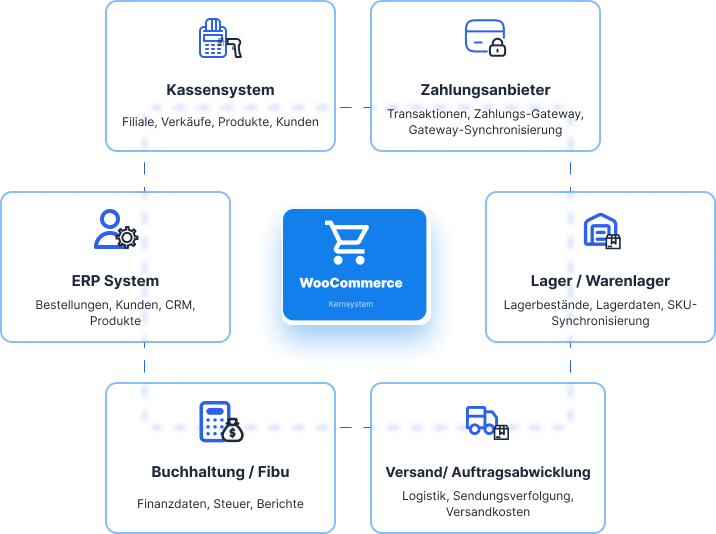
A WooCommerce shop is not an isolated frontend.
It is part of a trading system.
As soon as online sales, brick-and-mortar retail, ERP, accounting, logistics, and payment processing need to work together, theme optimization and plugin installation are no longer sufficient.
This is where the difference arises between a traditional WooCommerce agency and a structured system approach.
HighPots develops and operates WooCommerce not as a marketing interface, but as an integrated commerce infrastructure.
We do not deliver feature collections. We are responsible for process architecture.
We think in:
Our focus is on medium-sized companies in the DACH region and the EU with their high legal requirements – that is, on companies that want to use WooCommerce professionally, with clear structure, stable interfaces, and long-term maintainability.
WooCommerce offers enormous flexibility.
But without systems thinking and without architecture, this flexibility becomes a risk.
Combines expertise in e-commerce with technical excellence
HighPots takes care of the WooCommerce process architecture for your business.
Create or take over WooCommerce shop – structured instead of improvised
A WooCommerce project often starts with a clear objective:
A new online shop is to be created. Or an existing shop is to be modernized, expanded, or stabilized.
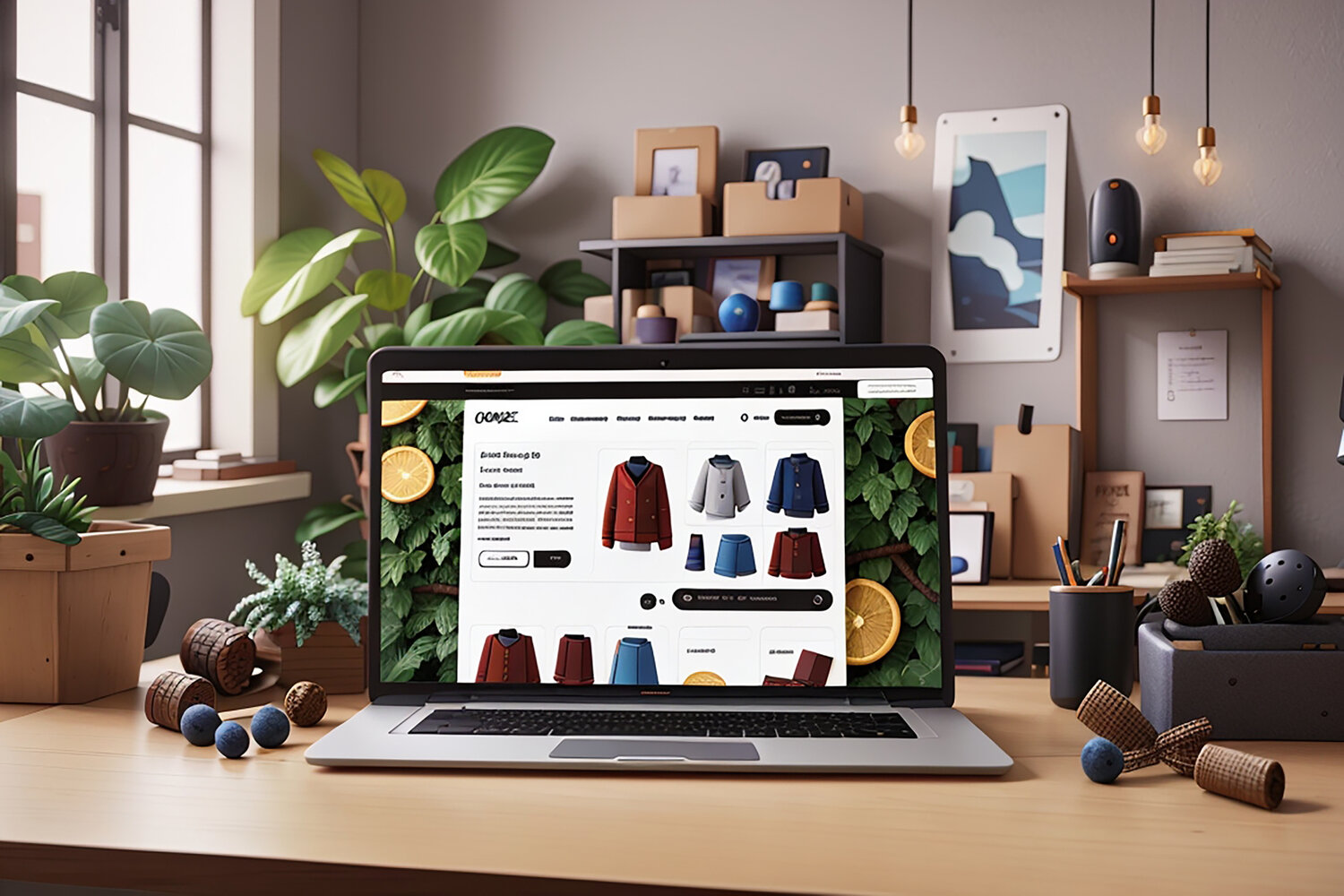
What is often underestimated in this context is the structural difference between:
A classic WooCommerce agency primarily focuses on:
The result can be visually convincing.
Technically, however, the complexity usually begins in the background.
HighPots takes a different path.
Redevelop WooCommerce
As a WooCommerce agency with an integration focus, we know that new projects do not start with a theme but with a structured requirements analysis. Among other things, we clarify which systems need to be connected and which accounting logic is required. We also check whether there is brick-and-mortar retail or POS requirements and which processes are currently manual – and should be automated. Likewise, it is defined which regulatory requirements apply in DE, AT, or CH. Only on this basis is a technical architecture created. WooCommerce is the frontend – not the entire system.
Take over existing WooCommerce shop
Many customers do not come with a new project, but with an existing system. As a WooCommerce agency, we encounter the following typical situations: The previous service provider is no longer available. Customizations clash with updates. The shop has grown but is structurally unstable. Integrations were added later. The technical responsibility is unclear. In such cases, we take over: code analysis, plugin and integration review, security and update strategy, stabilization of the architecture. The goal is not only further development but also structural cleanup.
Migration from other systems
Another entry point is the migration from: Shopify, Shopware, Magento, or proprietary SaaS solutions. Switching to WooCommerce makes sense when: more integration freedom is needed, complex business models need to be mapped, individual process logic is required, data sovereignty and system control are priorities. Migration does not only mean data transfer, but: rebuilding a viable system architecture.
A WooCommerce shop is not a system – until it is planned as one
Whether new development, acquisition, or migration:
WooCommerce projects are sustainably successful when they are planned as an integrated trading system – not as an isolated shop.
WooCommerce Integration: ERP, inventory management, DATEV and payment providers
WooCommerce is flexible.
That is precisely why integration problems usually do not arise at the start, but during growth.
As soon as orders need to be automatically transferred to the ERP,
inventory needs to be synchronized in real time,
payment data must be correctly recorded
and POS revenues need to be incorporated into the same accounting logic,
it is no longer enough to just “connect” interfaces.
What matters is:
What matters is:
Integration is not a plugin issue.
It defines the process stability of your company.
HighPots models these integrations not in isolation, but as a coherent architecture.
That means:
This is how WooCommerce becomes the central trading platform – not an isolated online shop.
WooCommerce ERP Integration
An ERP integration means more than just data exchange
Typical requirements:
Without clearly defined data flows arise:
We model the integration logic so that WooCommerce does not operate in isolation, but becomes part of a stable overall system.
WooCommerce DATEV and accounting integration
Many WooCommerce projects end at accounting.
Exports exist. Structure is lacking.
Relevant questions are:
Accounting is not an export button. It is a set of rules.
HighPots structures transaction logic so that booking data is generated systematically – not manually corrected afterward.
WooCommerce inventory management and stock reconciliation
Omnichannel often fails because of the warehouse.
Problems arise when:
A central inventory is not a convenience feature –
it is a prerequisite for scaling.
We integrate WooCommerce so that inventory management remains consistent across all channels.
WooCommerce payment providers and payment integration
Stripe, PayPal, Datatrans, TWINT or other providers can be integrated quickly.
But the decisive factor is:
Payment integration is not just checkout – it is part of the transaction chain.
WooCommerce POS Integration and Omnichannel
As soon as brick-and-mortar retail is added, the complexity increases.
A POS system must:
They share:
Online and offline are not separate worlds.
WooCommerce thus becomes the central trading platform, not just an online shop.
Success Factor WooCommerce Integration: Architecture Instead of Plugin Solutions
Unlike a traditional WooCommerce agency, we know: integration determines whether WooCommerce scales or grows unstably.
Systems do not grow through plugins.
They grow through architecture.
WooCommerce legally compliant in Germany, Austria, and Switzerland
WooCommerce is technically flexible.
Legal certainty does not automatically arise from the installation of a plugin.
Especially in the DACH region, specific regulatory requirements apply that must be considered when implementing:
Legal certainty concerns:
Many WooCommerce projects address these issues individually – usually through single plugins.
However, this does not create a consistent legal structure.
HighPots considers regulatory requirements not as a subsequent addition, but as a component of the system architecture.
WooCommerce legally compliant in Germany
Special features

WooCommerce legally compliant in Austria
Relevant aspects:
WooCommerce legally compliant in Switzerland
Special features:

Operating WooCommerce legally secure: Structure instead of individual measures
Legal certainty does not arise from checkboxes.
It arises through well-thought-out process logic.
WooCommerce can be professionally operated in all three countries –
if regulatory requirements are structurally considered.
WooCommerce maintenance, hosting, and technical support
A WooCommerce shop is not a one-time project.
It is a continuously operated system.
What matters is:
WooCommerce requires structured operation – not just occasional maintenance.
WooCommerce updates and version management
WordPress core, WooCommerce, plugins, and custom extensions are continuously evolving.
Uncoordinated updates often lead to:
HighPots works with clearly defined update processes:
Updates are not just a push of a button. They are part of system responsibility.
WooCommerce hosting and infrastructure
Performance and stability largely depend on the infrastructure.
Relevant aspects are:
WooCommerce requires a hosting setup that fits the integration architecture – especially for ERP, POS, or accounting integration.
Technical WooCommerce Support
Support is more than ticket processing.
It includes:
A structured support model ensures that not only symptoms are addressed but also causes.
Operate WooCommerce stably on a permanent basis
The crucial difference lies in taking responsibility.
Many agencies end their work after the go-live.
HighPots understands WooCommerce as a trading infrastructure to be operated permanently.
That means:
WooCommerce vs. Shopify – Architecture in Comparison
The question “WooCommerce or Shopify?” often arises early in the decision-making process.
Both systems enable professional online commerce.
The difference lies less in the range of functions – and more in the architecture and integration freedom.
Shopify: Standardized, ready to go quickly
Shopify is a cloud-based SaaS platform.Shopify is characterized by typical features such as quick setup, a clearly defined infrastructure, standardized integrations, and low technical effort. Therefore, the system is particularly suitable for business models that are heavily marketing-driven, require little individual process logic, and work with predefined integration patterns. While the clearly defined system boundaries bring significant advantages in simplicity, they can also mean limitations in complex integration.
WooCommerce: Integration freedom and system control
WooCommerce is not a closed SaaS system, but a flexible trading platform based on WordPress.Typical characteristics include full data sovereignty, a free choice of infrastructure, individual integration possibilities as well as extensibility through own logic. However, this freedom requires clear architecture, clean integration concepts, structured maintenance and the assumption of technical responsibility, as flexibility without corresponding system thinking can quickly lead to complexity.
When WooCommerce is strategically sensible
WooCommerce is particularly suitable when:- ERP or inventory management systems need to be deeply integrated
- connected to stationary retail (POS)
- individual accounting logic is required
- hybrid business models (goods + services) are represented
- regulatory requirements must be structurally taken into account
- long-term system control is desired
Use WooCommerce strategically – not just as a shop system
The central question is not:
“Which system is better?”
But:
“Do you need a shop project – or an integrated commerce infrastructure?”
If standardization is the priority, Shopify can be the right choice.
If integration architecture, process logic, and system responsibility are decisive, WooCommerce offers greater structural depth.
Why HighPots is more than a classic WooCommerce agency
The term “WooCommerce agency” describes part of our work.
However, it does not describe our approach.
A classic WooCommerce agency focuses on:
We don't sell features – we structure processes
Plugins solve individual functions. Trading systems require process logic.We define:
- Transaction processes
- Booking rules
- Data flows
- Integration limits
- Responsibilities
WooCommerce is not understood as a collection of extensions, but as a central platform within a commerce architecture.
We don’t just develop code – we take conceptual responsibility
Many projects fail not because of technology, but because of a lack of structure.HighPots brings:
- Experience in retail and e-commerce
- Understanding of internal processes
- structured requirements analysis
- Integration competence
- Operational responsibility
Technical implementation is a component.
Architecture is the core.We consider operation and scaling from the very beginning
A shop can go online. A system must run continuously stable.Our projects take into account:
- Maintainability
- Upgradability
- Documentation
- Expandability
- Compliance
- Support structure
The goal is not a short-term launch,
but long-term stability.Our position in the WooCommerce environment
WooCommerce needs system responsibility.HighPots is in the WooCommerce context:
- not a pure plugin provider
- no theme-focused service provider
- not a generic software developer
- no SaaS POS provider
But rather:
Architect for integrated trading systems based on WooCommerce.
But:
“Do you need a shop project – or an integrated commerce infrastructure?”
If standardization is the priority, Shopify can be the right choice.
If integration architecture, process logic, and system responsibility are decisive, WooCommerce offers greater structural depth.
Is your WooCommerce architecture scalable?
The term “WooCommerce agency” describes part of our work.
However, it does not describe our approach.
WooCommerce Infrastructure Check
HighPots offers a structured analysis of your existing WooCommerce environment.
The infrastructure check includes:
- Integration analysis (ERP, POS, accounting, payment)
- Data flow and process evaluation
- Update and maintainability
- Compliance Assessment (DACH)
- Risk analysis for scaling
Result is not a sales presentation,
but a structured assessment of your system architecture.
Who this approach is suitable for
Our collaboration is meaningful for companies that:
- Using WooCommerce strategically
- Want to master integration complexity
- integrate stationary trade
- Take regulatory requirements seriously
- wish for long-term system responsibility
It is not suitable for:
- pure theme optimization
- short-term “quick fixes”
- purely marketing-driven shop projects